Winter Skincare Routine for Pakistan 2026 - Dry Skin, Barrier Repair & What to Change
Novelax PharmaEvery year the same thing happens. October ends, the mornings turn cold, and skin that behaved all summer suddenly feels tight after washing, flakes around the nose, and stings when you apply the products you have used for months.
That is not new dryness. It is a damaged skin barrier — and barrier repair is the one thing 2026's skincare thinking has got right.
This guide covers what changes specifically in Pakistani winters and the exact routine swaps to make. Start now, before the cold arrives, and you avoid the problem instead of treating it.
Two companion reads: for the underlying causes see why skin gets dry in Pakistan, and for a full repair protocol see how to repair a damaged skin barrier. This article is the seasonal routine that sits on top of both.
What Pakistani Winter Actually Does to Skin
The air pulls moisture out of your skin
Cold air holds far less moisture than warm air. Combined with indoor heaters, that creates a humidity gap — and your skin loses water to the air continuously through the day. This is called transepidermal water loss, and it is the core mechanism behind every winter skin complaint.
Hot showers make it worse
Hot water strips the lipids that hold your skin barrier together. A long hot shower on a cold morning feels wonderful and does more barrier damage than almost anything else in a winter routine.
Pollution peaks in winter
Lahore and the wider Punjab see their worst air quality between November and January. Smog particles settle on skin, oxidise sebum and trigger inflammation — on top of skin that is already compromised by dryness.
UV does not take the winter off
This is the most expensive winter mistake in Pakistan. UV levels drop but do not disappear, and UVA — the wavelength responsible for pigmentation and ageing — stays remarkably constant year-round and passes straight through cloud and window glass.
People fade their dark spots all winter with treatment products, skip sunscreen because it is cold, and wonder why nothing improves.
How to Tell If Your Skin Barrier Is Damaged
Your barrier is the outermost layer of skin — a structure of cells held together by lipids, mainly ceramides. When it works, it keeps water in and irritants out. When it is damaged, both directions fail.
You likely have barrier damage if:
- Skin feels tight immediately after washing
- Products that never stung now sting
- Flaking around the nose, mouth or eyebrows
- Redness that comes and goes for no obvious reason
- Skin feels dry and oily at the same time
- Makeup or sunscreen sits patchy instead of smooth
- Breakouts appearing in places you do not normally get them
The counter-intuitive part: a damaged barrier often produces more oil. Dehydrated skin overcompensates. This is why people with oily skin still get winter flaking, and why stripping that oil away makes it worse.
If several of these apply to you year-round rather than only in winter, work through our barrier repair guide first — the seasonal routine below works far better on a barrier that is already recovering.
The Barrier-First Winter Routine
The 2026 shift is away from layering more actives and toward repairing the barrier first. Actives work far better on healthy skin — and cause far fewer problems.
Step 1 — Change how you cleanse, not just what
Use lukewarm water, never hot. Cleanse for 30-40 seconds, not two minutes. Pat dry, do not rub.
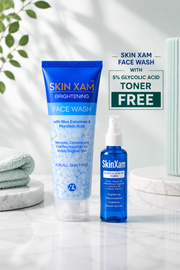
If your current face wash leaves your skin feeling tight, that tightness is stripped lipids, not cleanliness. Skin Xam Brightening Face Wash uses mandelic acid, the gentlest of the common exfoliating acids — it keeps skin clear through winter without stripping it.
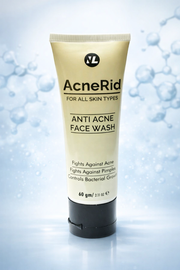
If you are acne-prone and use Acnerid Anti Acne Face Wash, consider dropping from twice daily to once daily through the coldest weeks, and always follow with moisturiser.
Step 2 — Apply treatment to damp skin
This single change makes a visible difference. Humectants — Hyaluronic Acid, glycerin — pull water from wherever they can find it. On dry skin in dry air, they can pull moisture out of deeper skin layers and make dryness worse. (More on how this works in our guide to why Hyaluronic Acid matters for Pakistani skin.)
Apply your serum within a minute of washing, while skin is still slightly damp, then seal it immediately.
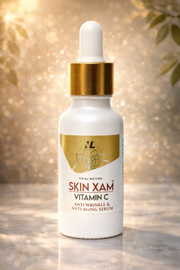
- Morning, for protection and brightness: Skin Xam Vitamin C Serum — antioxidant defence matters more in smog season, not less
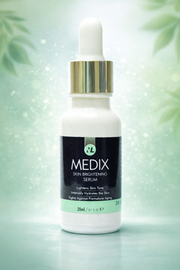
- Night, for dark spots: Medix Skin Brightening Serum with Alpha Arbutin
Step 3 — Seal with ceramides, morning and night
This is the step winter turns from optional into essential.
Ceramides are the lipids your barrier is built from. Applying them topically replaces what cold air and hot water strip away — which is why ceramide moisturisers are the centre of barrier-repair thinking.
NeoSoft Moisturizing Lotion combines Hyaluronic Acid to draw moisture in with Ceramides to lock it there. That pairing is the whole point: a humectant without an occlusive is half a routine, and in winter the missing half is the one that matters. Our guide to choosing a moisturiser for dry skin in Pakistan covers how to pick between textures.
For skin that needs more at night, layer Skin Xam Fairness Cream or MEDIX Skin Brightening Cream over the lotion — treatment and richness in one step.
Step 4 — Do not stop sunscreen
Every morning, cloudy days included, indoors near windows included.
Neoliva SPF 60 Sunscreen is broad spectrum, so it covers the UVA that drives pigmentation year-round. Skipping it through winter is the reason most people's dark spots never fully clear — they treat by night and undo it by day.
What to Change From Your Summer Routine
| Summer | Winter |
|---|---|
| Cleanse twice daily | Once or twice — reduce if skin feels tight |
| Lightweight lotion | Same lotion, applied twice as often |
| Exfoliate regularly | Cut back — barrier is already under strain |
| Serum on dry skin is fine | Always on damp skin, sealed immediately |
| Sunscreen daily | Sunscreen daily — unchanged |
Seven Winter Habits That Matter
- Lukewarm water only. The strongest single fix for winter dryness.
- Shorter showers. Five minutes, not twenty.
- Moisturise within 60 seconds of washing, while skin still holds water.
- Do not peel flakes. Pulling at them damages healthy skin underneath. Hydrate and they lift on their own.
- Ease off actives if skin is stinging. A stinging product on a damaged barrier delays repair.
- Drink water even when you are not thirsty. Cold weather suppresses thirst while dehydration continues.
- Protect lips and hands too — both lose moisture faster than facial skin.
Frequently Asked Questions
Do I really need sunscreen in Pakistani winter?
Yes. UVB drops in winter but UVA — which causes pigmentation and ageing — stays relatively constant and passes through cloud and glass. Skipping it is the most common reason dark spot treatment fails.
My skin is oily. Do I still need a richer routine?
You need a consistent one. Oily skin still loses water in winter, and dehydrated skin produces more oil to compensate. Keep your lightweight lotion and apply it more often rather than switching to something heavy.
How long does a damaged barrier take to repair?
Usually two to four weeks of gentle, consistent care. Stinging and tightness settle first; flaking and redness take longer. Full protocol in our barrier repair guide.
Can I keep using Vitamin C in winter?
Yes, and it matters more during smog season. If it stings, your barrier needs repair first — pause the active for a week, focus on cleansing gently and moisturising, then reintroduce it.
Why does my face flake even though it feels oily?
Dehydration and oiliness are different things. Your skin can lack water while producing plenty of oil. The fix is hydration, not more cleansing.
Is it safe to exfoliate in winter?
Less often, and gently. Mandelic acid is the mildest of the common options. If skin is already tight or stinging, stop entirely until the barrier settles.
Should I switch products when winter starts?
Usually not. Change frequency and technique first — lukewarm water, damp-skin application, moisturiser twice daily. Most winter problems are method problems, not product problems.
What about winter smog in Lahore?
Cleanse every evening without fail to remove settled particles, and keep an antioxidant serum in the morning routine. Smog oxidises sebum, and antioxidants are the direct counter.
Build Your Winter Routine
The essentials are a gentle cleanser, a ceramide moisturiser, and sunscreen. Everything else is optimisation.
For a complete set, the Anti Aging Bundle pairs Vitamin C serum, moisturiser and SPF 60 — the exact three-part structure winter calls for. For dry and dull skin together, the Advance Brightening Bundle covers cleansing through protection.
Prefer to choose your own? Make Your Own Bundle applies 15% automatically once your selection passes Rs. 4,000 in retail value, no code needed. Browse Dry Skin & Hydration for the full hydrating range, or Hyaluronic Acid products specifically.
Flat Rs. 250 delivery across Pakistan, 3-4 working days, Cash on Delivery available, free sample with every order.
Start before the cold does. A barrier that is intact in October rarely breaks down in January — and repairing one in mid-winter takes far longer than protecting it now.