Hair Fall in Women: 8 Real Causes and a Realistic Routine (Pakistan Guide)
Novelax PharmaHair fall in women is different from hair fall in men. It rarely shows up as a bald patch. Instead, the parting slowly widens, the ponytail feels thinner, the hairbrush fills faster, and the drain clogs after every wash. Because it is gradual, most women in Pakistan put up with it for a year or more before doing anything — by which time the cause has often been there all along, and it is usually fixable.
This guide explains the real causes of hair fall in women (many are internal, not "bad shampoo"), how to tell which one applies to you, which blood tests are worth doing, and a realistic scalp routine that supports regrowth over 3 to 6 months.
First: How Much Hair Fall Is Normal?
Losing 50 to 100 hairs a day is normal — hair grows in cycles and old strands shed to make room for new ones. Long hair makes this look dramatic because each strand is bigger. Worry when:
- Shedding stays clearly heavier than usual for more than 6 to 8 weeks
- Your parting looks wider in photos than it did a year ago
- Your ponytail circumference has visibly shrunk
- You see thinning at the temples or crown
The 8 Most Common Causes of Hair Fall in Women
1. Iron deficiency (the most common cause in Pakistan)
Low ferritin (stored iron) is the single most frequent reason for diffuse hair thinning in Pakistani women — heavy periods, pregnancy, low-meat diets and frequent tea with meals all contribute. Hair follicles are among the first to be starved when iron is low. A simple serum ferritin test tells you. No shampoo can fix this; iron can.
2. Post-pregnancy shedding (telogen effluvium)
During pregnancy, high oestrogen keeps hair in the growth phase, so it looks thicker than ever. Two to four months after delivery, all that "held" hair sheds at once. It is alarming but temporary — most women see regrowth by 6 to 12 months. Scalp care during this period reduces breakage of the new baby hairs.
3. Thyroid imbalance
Both an underactive and an overactive thyroid cause diffuse thinning, often with dry skin, weight changes, tiredness or irregular periods. A TSH test is inexpensive and worth doing.
4. PCOS and hormonal hair loss
Polycystic ovary syndrome raises androgens, which thin hair at the crown and front while sometimes increasing facial hair. If hair fall comes with irregular periods, acne or weight gain, ask your doctor about PCOS. This type responds best when the hormonal cause is treated alongside scalp care.
5. Vitamin D and B12 deficiency
Extremely common in Pakistan despite the sunshine, because most women are indoors or covered during the day. Low vitamin D and B12 weaken the hair cycle. Both are correctable with supplements after a test.
6. Stress, illness and crash dieting
A fever, typhoid, COVID, surgery, a major shock or a very low-calorie diet pushes a large share of hair into the shedding phase — the fall shows up 2 to 3 months after the event. It recovers on its own once the trigger has passed, usually within 6 months.
7. Traction from tight hairstyles
Tight buns, high ponytails, braids pulled hard at the hairline, and heavy extensions cause traction alopecia — thinning at the temples and hairline. This one is entirely mechanical and reverses if the pulling stops early.
8. Scalp problems: dandruff, oily scalp, hard water
An irritated, flaky or oily scalp does not anchor hair well. Hard water leaves mineral buildup that makes hair rough and snap. These do not stop growth, but they increase breakage and make every other cause worse — and they are the part you can control today.
Which Blood Tests to Ask For
If hair fall has lasted more than 2 months, ask your doctor for: CBC, serum ferritin, TSH, vitamin D, vitamin B12. These five cover the majority of internal causes. Treating a deficiency and doing a scalp routine together gives far better results than either alone.
A Realistic Routine for Women's Hair Fall
Scalp care cannot fix iron or hormones, but it does three things that matter: keeps the scalp clean and calm so follicles are not irritated, reduces breakage so the hair you have looks fuller, and supports the roots with ingredients known for hair strength.
Step 1 — Cleanse 2 to 3 times a week
Hairum Anti Hairfall Shampoo contains Biotin, Hydrolyzed Keratin and Argan Oil for strength and softness, plus Piroctone Olamine to control dandruff and scalp oil. Use lukewarm water, massage the scalp for a minute, rinse well. Daily washing strips the scalp; once a week leaves too much buildup in Pakistan's humidity.
Step 2 — Serum on the scalp, daily
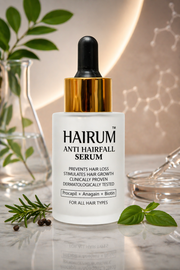
Hairum Anti Hairfall Serum combines Procapil, AnaGain (pea sprout extract) and Biotin in a Hyaluronic Acid base. Apply a few drops directly to the scalp on clean, dry or slightly damp hair, massage gently for 2 to 3 minutes, do not rinse. Night-time is easiest. Both products together: Anti Hairfall Bundle.
Step 3 — Stop the breakage
- Loosen the hairstyle: low, loose ties; no tight buns daily; give the hairline a break.
- Never tie or brush wet hair — it stretches and snaps.
- Use a wide-tooth comb; detangle from the ends up.
- Limit straighteners and blow-drying to 1–2 times a week; use heat protection.
- Sleep on a satin or silk pillowcase, or wrap hair loosely in a soft scarf.
Step 4 — Feed the follicle
Protein at every meal (eggs, daal, chicken, fish), iron-rich foods (red meat, spinach, chana) with a source of vitamin C, and no tea within an hour of meals (it blocks iron absorption). Supplements only after a test — more is not better.
What to Expect and When
- Weeks 1–2: scalp feels cleaner, less itchy, less oily.
- Weeks 4–6: shedding on the brush and in the drain visibly reduces.
- Weeks 8–12: less breakage, hair feels stronger; short new baby hairs at the hairline.
- 3–6 months: visible fullness at the parting and ponytail — hair grows about 1 cm a month, so patience is unavoidable.
Take a photo of your parting under the same light every month. Day-to-day change is invisible; month-to-month is not.
When to See a Dermatologist
- Bald patches, a receding hairline or thinning concentrated at the crown
- Hair fall with scalp pain, scaling or sores
- Sudden, heavy shedding that does not settle within 3 months
- Hair fall alongside irregular periods, facial hair or rapid weight change
Frequently Asked Questions
Why is my hair falling out so much as a woman?
The most common causes in Pakistan are iron deficiency, post-pregnancy shedding, thyroid imbalance, PCOS, vitamin D or B12 deficiency, stress, tight hairstyles and an irritated scalp. A ferritin, TSH, vitamin D and B12 test identifies most internal causes.
Does hair fall after pregnancy stop on its own?
Yes. Postpartum shedding usually starts 2–4 months after delivery and settles by 6–12 months. A gentle scalp routine reduces breakage of the new growth.
Can Hairum Shampoo and Serum be used during pregnancy or breastfeeding?
They are topical cosmetic hair products, but every pregnancy is different — check the ingredient list with your doctor before starting anything new.
Which shampoo is best for hair fall in women?
One that cleans without stripping and supports the roots: Hairum Anti Hairfall Shampoo with Biotin, Keratin, Argan Oil and Piroctone Olamine suits both oily and dry scalps.
How long does it take to see results?
Reduced shedding in 4 to 6 weeks; stronger hair by 8 to 12 weeks; visible fullness in 3 to 6 months, because hair only grows about 1 cm per month.
Does oiling stop hair fall?
Oil conditions the lengths and reduces breakage, but it does not stop shedding from an internal cause. Apply it to the lengths 30–60 minutes before washing, not on an oily scalp overnight.
Final Thoughts
Hair fall in women is usually a signal, not a shampoo problem — but the scalp routine is the part you can start today while the tests come back. Cleanse 2–3 times a week with Hairum Anti Hairfall Shampoo, apply Hairum Anti Hairfall Serum nightly, stop the breakage, and get your ferritin and thyroid checked. Both products are available with Cash on Delivery across Pakistan (flat Rs. 250 delivery, 3–4 working days).