Hair Fall in Men in Pakistan: What's Actually Causing It and What Slows It Down
Novelax PharmaMen don't usually message us about hair fall until it's visible in the mirror — the temples going back, the crown thinning, the shower drain filling faster than it used to. By then there's usually a year of ignoring it behind them and a cousin who's already said "abbu ke bhi gaye the, tumhare bhi jayenge".
Here's the thing we tell every man who asks: some of that is true, and some of it is not, and the difference between the two is worth knowing before you spend money. So — what causes hair fall in men in Pakistan, what actually slows it, and what's a waste of your money.
First, which kind of hair fall is it?
This matters more than anything else, because the two main types need different things.
Pattern hair loss (male pattern baldness). Temples receding into an M shape, a thinning patch at the crown, or both. Driven by genetics and the hormone DHT, which shrinks hair follicles over years. This is the "abbu ke bhi gaye" kind. It starts anywhere from the early twenties and it doesn't reverse on its own — but it can be slowed significantly, and the earlier you start, the more hair you keep.
Shedding (telogen effluvium). Hair coming out everywhere at once — on the pillow, in the comb, all over the scalp rather than just temples or crown. This is triggered by something: a fever, typhoid, COVID, surgery, a very stressful few months, crash dieting, or a scalp problem like dandruff. It shows up 2–3 months after the trigger and it usually recovers on its own within 6 months once the cause is gone.
Quick test: look at your hairline in an old photo from 3–4 years ago. If the shape has changed, it's pattern. If the shape is the same but everything's thinner and it started suddenly, it's shedding. Plenty of men have both.
What makes it worse (and is fixable)
Even pattern hair loss gets sped up by things you can control, and shedding is often entirely caused by them.
Dandruff and an oily, itchy scalp. This is the most common thing we see in men. An inflamed scalp doesn't hold hair well, and the scratching breaks it. The fungus behind dandruff feeds on scalp oil — and most men's scalps are oily. If you have flakes or itch, that's the first thing to fix. We wrote the whole guide in Dandruff Ka Ilaj.
Heavy oil left on overnight. Mustard oil, coconut oil, whatever your family uses — on an already oily scalp, left overnight, it feeds the dandruff fungus and clogs follicles. Oil is fine on the lengths for an hour before washing. Not on the scalp all night.
Washing once a week. Common among men who've been told washing causes hair fall. It doesn't. A week of sweat, dust and oil sitting on the scalp does. In Pakistan's heat, 3 times a week is about right.
Hard water. Most of the country. It leaves mineral deposits that make hair rough and brittle so it snaps. You can't fix the water, but a keratin-containing shampoo and a conditioner or serum on the lengths reduce the breakage.
Smoking, poor sleep, and a diet with no protein. Hair is protein. Eggs, daal, chicken, meat — most Pakistani men eat plenty of roti and not enough of these. Smoking reduces blood flow to the scalp. Neither causes baldness on its own; both make it faster.
Tight caps and helmets all day. Not a cause of pattern loss, but constant friction and sweat under a helmet doesn't help an already stressed scalp. Wash after long rides.
A routine that actually slows it
We're going to be straight with you: no shampoo regrows a bald crown. What a good routine does is keep the scalp healthy, reduce breakage, and support the follicles you still have so they keep producing. For pattern loss caught early, that's the difference between thinning at 35 and bald at 35. For shedding, it speeds recovery.
Step 1 — Shampoo 3 times a week
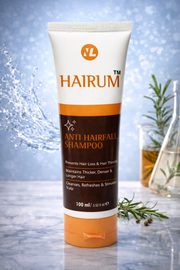
Hairum Anti Hairfall Shampoo is built for exactly the male scalp we see most: Piroctone Olamine controls dandruff and oil, Biotin and Hydrolyzed Keratin strengthen the hair so it breaks less, and Argan Oil keeps the lengths from going rough in hard water. Lukewarm water, massage the scalp with fingertips for a full minute, leave for another minute, rinse well. Daily washing strips the scalp; once a week leaves it clogged. Three is the number.
Step 2 — Serum on the scalp, every night
Hairum Anti Hairfall Serum has Procapil — which works on the same DHT pathway behind pattern loss and improves blood flow to the follicle — plus AnaGain (pea sprout) and Biotin. A few drops directly on the scalp, especially temples and crown, massaged in for 2–3 minutes, not rinsed. On clean or slightly damp hair, at night. This is the step that matters most for pattern hair loss, and it only works if you do it consistently for months, not weeks.
Both together are the Anti Hairfall Bundle (one shampoo, two serums — because the serum runs out faster).
Step 3 — Stop the breakage
Don't towel-dry roughly; pat. Don't comb wet hair hard. Use a wide-tooth comb. Skip the hair gel and wax on the scalp itself — on the lengths is fine. Oil the lengths an hour before washing if you like oil, never the scalp overnight.
Step 4 — Eat like your hair depends on it, because it does
Protein at every meal. Iron (red meat, spinach, chana). Zinc (nuts, seeds, meat). If you're vegetarian or eat mostly roti-sabzi, this is likely part of the problem. Supplements only after a blood test — more is not better.
The blood tests worth doing
If the shedding is sudden or heavy, ask for: CBC, serum ferritin, TSH, Vitamin D, Vitamin B12. Rs. 2–3 thousand at most labs. Low vitamin D and B12 are extremely common in Pakistani men who work indoors, and thyroid problems in men get missed because nobody thinks to check. Treating a deficiency plus the scalp routine gives far better results than either alone.
What to expect, and when
Weeks 1–2: scalp cleaner, less itch, less oil by evening. Weeks 4–6: visibly less hair in the comb and drain. Weeks 8–12: hair feels stronger, less breakage; on a shedding case, short new hairs at the hairline. Months 3–6: for pattern loss, the thinning stabilises — that's the win. Hair grows about 1 cm a month, so density changes take the full six months to judge.
Take a photo of your crown and hairline under the bathroom light on day one. Then monthly. Nobody notices the change day to day.
When to see a doctor instead
Rapid recession in your early twenties, bald patches that are completely smooth (could be alopecia areata), hair fall with scalp pain, sores or thick scale, or heavy shedding that hasn't settled in 3 months. A dermatologist can prescribe treatments like minoxidil or finasteride for pattern loss that go beyond what any shampoo does — and if your loss is significant, the honest advice is to see one early and use a good scalp routine alongside, not instead of.
The things that don't work (save your money)
Onion juice (irritates, doesn't regrow). "Hair growth oils" from Facebook ads with no ingredient list. Caffeine shampoo alone. Shaving your head to "make it grow thicker" (it grows back exactly the same). Rubbing fingernails together. And any product that promises a full head of hair in 30 days — hair doesn't grow that fast for anyone.
Frequently Asked Questions
Why is my hair falling out so much as a man in Pakistan?
Most often it's male pattern hair loss (genetic, DHT-driven) made worse by dandruff, an oily scalp, hard water, heavy overnight oiling and a low-protein diet. Sudden all-over shedding usually follows an illness, stress or a deficiency.
Can hair fall in men be stopped?
Shedding from a temporary cause recovers on its own once the cause is fixed. Pattern hair loss can be slowed significantly with a consistent scalp routine, good nutrition and, if needed, dermatologist-prescribed treatment — the earlier you start, the more you keep.
Which shampoo is best for hair fall in men?
One that controls dandruff and oil while strengthening hair: Hairum Anti Hairfall Shampoo (Piroctone Olamine, Biotin, Keratin, Argan Oil), used 3 times a week.
Does hair oil stop hair fall?
No. Oil conditions the lengths and reduces breakage, but left on an oily scalp overnight it feeds dandruff and clogs follicles. Use it on the lengths for an hour before washing, not on the scalp all night.
How long does Hairum take to work?
Less itch and oil in 1–2 weeks; noticeably less shedding in 4–6 weeks; stronger hair by 8–12 weeks; stabilised thinning in 3–6 months with nightly serum use.
Does washing hair daily cause hair fall?
No — the hairs you see in the shower were already loose. Daily washing can dry the scalp though; 3 times a week is right for most men in Pakistan's climate.
Can a receding hairline grow back?
Early recession can be slowed and sometimes partly improved with a consistent routine and prescription treatment; long-established bald areas do not regrow with any topical product.
Should I see a doctor for hair fall?
Yes, if recession is fast and you're under 25, if there are smooth bald patches, scalp pain or sores, or if heavy shedding hasn't settled in 3 months.
The short version
Figure out if it's pattern or shedding, fix the scalp first (dandruff, oil, overnight oiling), shampoo three times a week with something that strengthens hair, serum on the scalp every night, eat protein, get the blood tests if it's sudden, and see a dermatologist early if it's clearly pattern loss. Start today, not next year — that's the one piece of advice every man wishes he'd taken. Hairum Shampoo and Serum are Cash on Delivery across Pakistan, Rs. 250 flat delivery. Questions — the WhatsApp button is right there.