Medicated Hand and Foot Cream in Pakistan: What "Medicated" Really Means and Which One You Need
Novelax PharmaType "medicated hand and foot cream" into Google in Pakistan and you'll get everything from pharmacy brands to Rs. 300 whitening tubs with "medicated" printed in big letters. It's easy to see why people search for it. "Medicated" sounds safer, stronger and more trustworthy than an ordinary cream.
The problem is that the word on the label often means very little. Some of the most dangerous creams in the market call themselves medicated, and most of the genuinely good hand and foot creams aren't medicines at all. This guide explains what the word really means, when you actually need a medicine, and what to look for when all you want is soft heels and hands that match the rest of your skin.
What "medicated" actually means
In Pakistan, a medicine has to be registered with DRAP (the Drug Regulatory Authority of Pakistan) for a specific condition, and its pack carries a registration number. Antifungal creams for athlete's foot, steroid creams for eczema and antibiotic creams for infected wounds are medicines. A doctor or pharmacist tells you which one to use, for how long, and when to stop.
Almost every hand and foot cream you see online, including pharmacy brands with a clinical look, is a cosmetic. That isn't a bad thing. A cosmetic cream with the right ingredients is exactly what dry, rough and cracked skin needs. It just means "medicated" on the front of the tube is usually marketing, and you should judge the cream by its ingredient list instead.
When you really do need a medicine
Some hand and foot problems look like dryness but need treatment that no moisturiser can give:
- Itching, peeling or white soggy skin between the toes. This is usually a fungal infection. It needs an antifungal, not a moisturiser.
- Red, itchy, scaly patches on the hands that keep coming back, especially after detergent. This may be eczema, and a doctor may prescribe a short course of a steroid cream.
- Cracks that bleed, ooze or have pus, or skin around them that is red, hot and swollen.
- Thick, yellow or crumbly toenails, which point to a nail fungus.
- Any wound on the feet if you have diabetes. Don't treat these yourself at all. See a doctor the same week.
For everything else, which is most cracked heels, rough elbows, dry hands and dark knuckles, you don't need a medicine. You need a well-made cream and a few weeks of using it properly.
The real risk: "medicated whitening" creams
This is where the word does the most damage. Many creams sold as a "medicated hand and foot whitening cream" get their quick results from ingredients that should only ever be used under a doctor's care:
- Strong steroids such as clobetasol. Skin looks lighter and smoother for a few weeks, then thins, shows red veins, and darkens again when you stop.
- Hydroquinone in unknown amounts, which can cause irritation and, with long use, a blue-black discolouration that is very hard to treat.
- Mercury, which is banned in cosmetics in many countries because it is absorbed through the skin.
You usually can't tell from the name. You can tell from the pack. Walk away if a cream promises results in 3 to 7 days, has no full ingredient list, has no batch number, expiry date or manufacturer address, or is sold only through a social media page.
No cream changes the skin colour you were born with. A good one clears dry, darkened skin and fades tanning so your hands and feet match the rest of your body again. That takes four to eight weeks, and anything much faster deserves suspicion.
What to look for instead: the "pharmacy-grade" checklist
If you want something that works the way people expect a medicated cream to work, look for these on the ingredient list:
Urea
This is the ingredient pharmacies and dermatologists reach for first with rough, cracked skin. Urea softens hard skin and pulls water into it. The strength matters:
- Around 5 to 10 percent: for daily use on hands, feet, elbows and knees.
- 20 to 40 percent: for very thick calluses on the heels only. These can sting on open cracks and are best used on a doctor's advice.
A heavy, sealing base
Petrolatum, mineral oil and dimethicone keep water in the skin overnight. On heels this matters more than anything else in the tube.
Glycerin
Draws water into the skin and works alongside Urea.
Niacinamide and Vitamin C, for dark patches
If knuckles, elbows or heels are darker than the rest of your skin, these two are the safe way to even them out. Niacinamide (Vitamin B3) evens tone and strengthens the skin barrier. A stable Vitamin C such as 3-O-Ethyl Ascorbic Acid fades darkness slowly without stinging.
A complete label
Full ingredient list, batch number, expiry date, and a manufacturer you could actually contact. This matters more than the word "medicated" ever will.
Which one do you need?
- Cracked heels only, no dark patches: a plain urea cream or lotion will do the job. These cost around Rs. 1,000 for 100ml at pharmacies.
- Cracked heels plus dark heels, knuckles or elbows: a cream that combines Urea with Niacinamide and Vitamin C, so you're treating dryness and tone with one product.
- Dry, rough hands from washing and detergent: a urea cream with a sealing base, used after every wash, plus gloves for dishes and laundry.
- Itching between the toes, red itchy patches, or bleeding cracks: see a doctor or pharmacist. This is where a real medicine belongs.
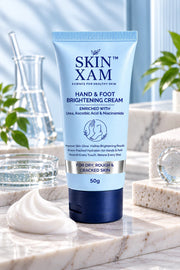
Where Skin Xam Hand & Foot Cream fits
We'll be straight with you: Skin Xam Hand & Foot Brightening Cream is not a medicine, and we don't sell it as one. It's a cosmetic cream made for the second group above, people whose heels are cracked and whose knuckles, elbows or heels have gone darker over time.
- Urea to soften thick, cracked skin
- Petrolatum, mineral oil and dimethicone to seal moisture in overnight
- Glycerin for hydration
- Niacinamide and 3-O-Ethyl Ascorbic Acid (Vitamin C) for uneven tone
- Dermatologically tested, steroid and mercury free, full ingredient list, batch number and expiry on every pack
- Rs. 990 for 50g, Cash on Delivery and Rs. 250 delivery anywhere in Pakistan
Imported urea foot creams usually cost Rs. 3,000 or more, and most of them don't include brightening ingredients. If you want Urea, Niacinamide and Vitamin C in one tube without paying import prices, this is what we made it for.
What to expect: dryness eases in three to five days, rough skin on the heels clears in two to three weeks, and darker areas even out over four to eight weeks.
How to use it so it works
At night: soak your feet in lukewarm water for 10 minutes. Twice a week, rub the wet heels gently with a pumice stone. Pat dry and apply the cream while the skin is still slightly damp, then put on cotton socks. Never cut hard skin with a blade.
Hands: apply after washing, especially after dishes and at bedtime. Keep the tube by the sink.
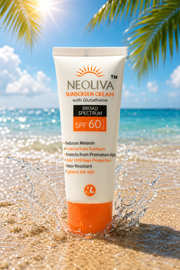
Dark knuckles: use the cream twice a day and put sunscreen on the backs of your hands when you go out. Neoliva SPF 60 works on hands as well as the face.
In the day: wear footwear that is closed at the back. Open heels are the main reason heels crack again.
Frequently Asked Questions
What is a medicated hand and foot cream?
Strictly, a medicated cream is a medicine registered with DRAP for a specific condition, such as an antifungal for athlete's foot or a steroid for eczema. Most hand and foot creams sold as medicated are actually cosmetic creams with active ingredients like Urea. For everyday dryness and cracked heels, a well-made cosmetic cream is what you need.
Which is the best medicated cream for cracked heels in Pakistan?
For ordinary cracked heels, a cream with Urea and a heavy base such as petrolatum works best. Apply it at night on damp heels and wear cotton socks. If cracks are bleeding, infected, or you have diabetes, see a doctor instead of choosing a cream yourself.
Is there a medicated hand and foot whitening cream that is safe?
Be very careful with any cream sold as a medicated whitening cream. Fast whitening usually comes from steroids, hydroquinone or mercury, which can thin and damage skin. Safe ingredients such as Niacinamide and Vitamin C even out dark knuckles and heels slowly, over 4 to 8 weeks.
What strength of Urea is right for hands and feet?
Lower strengths of around 5 to 10 percent suit daily use on hands and feet. Strong creams of 20 to 40 percent are meant for very thick calluses on the heels only, can sting on cracks, and are best used on a doctor's advice.
How much does a urea hand and foot cream cost in Pakistan?
Plain urea lotions at pharmacies cost around Rs. 1,000 for 100ml, and imported urea foot creams usually cost Rs. 3,000 or more. Skin Xam Hand & Foot Brightening Cream, which combines Urea with Niacinamide and Vitamin C, is Rs. 990 for 50g.
Is Skin Xam Hand & Foot Cream medicated?
No. It is a cosmetic cream, dermatologically tested, steroid and mercury free, with a full ingredient list on the pack. For everyday dry, rough and darkened skin on hands and feet, that is the safer choice. Medicines should be used only for conditions a doctor has diagnosed.
When should I see a doctor for my hands or feet?
If you have diabetes and any wound on your feet, if cracks bleed or have pus, if there is itching or white soggy skin between the toes, if you have red itchy patches that keep coming back, or if nothing improves after three weeks of proper care.
The bottom line
Don't choose a hand and foot cream because it says "medicated" on the front. Choose it because of what's on the back: Urea, a proper sealing base, Niacinamide or Vitamin C if dark patches bother you, and a full, honest label. Save real medicines for the problems a doctor has diagnosed. For everyday cracked heels and dark knuckles, Skin Xam Hand & Foot Brightening Cream is Rs. 990 with Cash on Delivery across Pakistan.