Glutathione Cream in Pakistan (2026): Does It Really Whiten Skin? Price, Side Effects & Results
Novelax PharmaEvery week someone messages us on WhatsApp with the same question, worded slightly differently: "Bhai, glutathione cream se rang gora hota hai?" Sometimes it's a bride-to-be with three months until the wedding. Sometimes it's a man in Karachi who rides a bike to work and has come back from summer two shades darker. Sometimes it's a mother asking for her teenage daughter.
We've been making brightening creams for years, so we're going to give you the answer we give them — the real one, not the one that sells the most tubes. It's a bit longer than "yes" or "no", but by the end you'll know exactly what glutathione cream can do for you, what it can't, whether it's worth the money, and how to use it so you actually see a change.
First, what glutathione actually is
Glutathione isn't some exotic chemical. Your liver makes it right now. It's a small antioxidant molecule — three amino acids stuck together — and its day job is protecting your cells from damage.
The reason it ended up in skincare is a side effect of that job. Glutathione gets in the way of tyrosinase, the enzyme your skin uses to make melanin. Less active tyrosinase means less new pigment, and the pigment that does get made leans lighter. That's it. That's the whole mechanism. Everything you've heard about glutathione, good or bad, comes from that one sentence.
You'll usually find it mixed with Alpha Arbutin, Niacinamide, Kojic Acid or Vitamin C, because each of those interrupts pigment at a different step and they work better together than alone.
So does it whiten skin or not?
Let's be direct, because this is the only question that matters to most people reading this.
No cream changes the colour you were born with. Not glutathione, not anything. Your baseline tone is decided by your genes, and the only things that "change" it in a week are steroids and mercury — and what they do to your skin afterwards is not worth it (more on that below).
But here's the part people miss: most of us in Pakistan are not walking around at our natural tone. We're one or two shades darker than that, because of sun, pollution, old acne marks, and pigmentation that's built up over years. That extra layer is exactly what glutathione works on. Tan lifts. Dark spots fade. The patchiness around the mouth and forehead evens out. Skin starts looking clean and, for lack of a better word, awake.
When customers send us before-and-after photos after two months, that's what we see. Not a different person — the same person, but the version that shows up in good lighting. If that's what you're after, glutathione cream is a very good choice. If you're hoping to go from wheatish to fair, it will disappoint you, and so will everything else that's safe.
Cream, tablets or injections — which one?
All three are sold here, sometimes from the same counter. They are very different things.
Cream works where you put it. Nothing goes into your bloodstream, so there's no systemic risk. It's slower — six to eight weeks before you'd notice in a photo — and it only does its job if you're also wearing sunscreen. For dark spots, tan and uneven tone on the face, it's the sensible option and the one we'd choose for our own family.
Tablets have a basic problem: your gut breaks most of the glutathione down before it reaches anything. Some people take them for months and notice a slight overall brightness; plenty notice nothing. They won't hurt you at normal doses, but you're paying quite a lot for a maybe.
Injections and drips are the ones we get asked about most and the ones we're least comfortable with. Yes, putting glutathione straight into the blood can produce a faster, more visible effect. That's exactly why the risks are real: allergic reactions, strain on the kidneys with repeated high doses, and — the bit nobody talks about — the vial itself. A lot of what's being injected in salons has no traceable manufacturer. DRAP has issued warnings about whitening injections more than once. We don't sell them and we don't recommend them for cosmetic use. If you're set on it, at least do it through a qualified dermatologist, not a beautician.
What actually happens, week by week
People give up on brightening creams in week two because "nothing is happening". Something is happening — it's just under the surface. Here's the honest timeline we tell customers:
In the first two weeks your skin will feel smoother and better hydrated. That's the base of the cream doing its work. Colour-wise, nothing yet. Don't judge it here.
Around week three or four, tan starts to lift and the dullness goes. Skin looks fresher in daylight. You might not notice; someone who hasn't seen you in a while probably will.
By week six to eight, dark spots and old acne marks are visibly lighter and the tone is more even. This is when it shows in photos, and it's when most of our repeat customers reorder.
After that it's maintenance. The results stay as long as the sunscreen stays. We've watched people get beautiful results, drop the SPF in winter because "there's no sun", and be back where they started by March. The sun doesn't care about the season.
Side effects — and the ones that aren't glutathione's fault
Glutathione on its own is one of the gentlest brightening ingredients there is. It doesn't sting, it doesn't peel, it's fine for daily use on sensitive skin. In years of selling it we've had very few complaints about the ingredient itself.
The horror stories you've heard — the thin, shiny skin, the red veins, the sudden acne, the face that went darker than before — those come from what gets hidden alongside it in unlabelled creams:
Steroids like clobetasol give a glow in three days. Then they thin the skin, break the tiny blood vessels, trigger acne, and when you stop, the pigmentation comes back worse. We see this constantly, and undoing it takes months.
Mercury is banned in cosmetics for good reason. It lightens fast and then causes rashes, grey discolouration and long-term harm.
Hydroquinone above 2% is prescription-strength. Used for months without supervision it can leave permanent blue-grey patches.
Our rule, and you can apply it to any cream from any brand including ours: turn the box over. There should be a full ingredient list, a manufacturer's name and address, a batch number and an expiry date. Missing any one of those? Put it back. Every product in our glutathione range carries all four, and none of them contain steroids or mercury — that's not marketing, it's the reason the company exists.
Is it right for you?
Glutathione cream is a good fit if your problem is tan, dark spots, marks left behind by acne, a dull or patchy tone, or melasma that you're already managing with a dermatologist. It's also the right choice if you want a brighter, more even face without harsh actives.
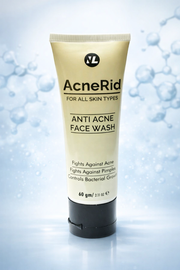
It's the wrong tool if you want to change your natural colour (nothing safe does that), if you have active breakouts right now (treat those first — a salicylic acid face wash — then brighten the marks), or if your skin is currently irritated from something else. Calm it first, then start.
If you're pregnant or breastfeeding, topical glutathione is generally considered low-risk, but every pregnancy is different. Take the ingredient list to your doctor before starting anything new. That applies to every product, not just ours.
What should it cost in Pakistan?
Since price is half the question, here's the market as we see it in 2026:
Under Rs. 700, you're usually looking at an unbranded jar or an "imported" tube with no ingredient list. This is where the steroid and mercury problems live. Cheap is expensive here.
Rs. 900 to 1,500 is the range for properly labelled, pharmaceutical-grade Pakistani creams. This is where you should be shopping for a daily-use cream.
Above Rs. 2,500 you're into imported Korean and Japanese brands. Some are excellent. But you're paying for shipping, packaging and the brand name — not for more glutathione. The active ingredients are the same molecules.
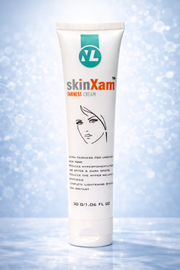
For a concrete number: our Skin Xam Fairness Cream — L-Glutathione with Alpha Arbutin, Niacinamide and Kojic Acid Dipalmitate — is Rs. 1,260, Cash on Delivery anywhere in Pakistan.
How to use it so it actually works
A glutathione cream on its own, with no sunscreen and no routine, will give you a fraction of what it's capable of. Here's the routine we hand to customers. It's short on purpose; people don't stick to long ones.
Morning
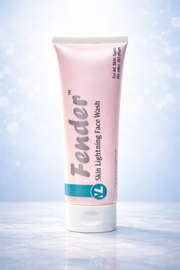
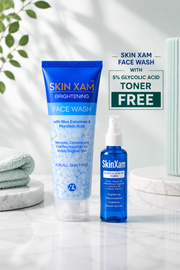
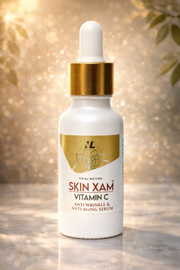
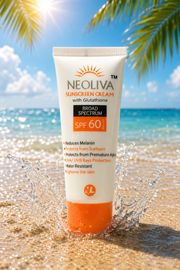
Wash with something gentle that also brightens — Fender Skin Lightening Face Wash has glutathione and Vitamin C; if your skin is oily, Skin Xam Brightening Face Wash suits better. Then two or three drops of Vitamin C serum — Vitamin C and glutathione help each other along. Then sunscreen. Not "sunscreen if you're going out". Sunscreen. Neoliva SPF 60 has glutathione in it too, so it's doing double duty. This single step is the difference between customers who get results and customers who don't.
Night
Cleanse, then a pea-sized amount of glutathione cream over the whole face, a little extra pressed onto the darker spots. Skin Xam Fairness Cream for normal or oily skin; MEDIX Skin Brightening Cream if yours runs dry.
One more thing, and we mean it: take a photo on day one, same spot, same light, no filter. Then every two weeks. You will not see the change day to day. You will see it in the photos.
How it compares to the other brightening ingredients
People ask us whether they should "just get pure glutathione" instead of a blend. Honestly, no. Glutathione slows new pigment gently. Alpha Arbutin blocks tyrosinase more directly and is the strongest safe spot-fader you can buy without a prescription — we wrote a full comparison in Alpha Arbutin vs Niacinamide. Niacinamide stops pigment being handed to the skin cells and controls oil while it's at it. Vitamin C gives glow and antioxidant cover in the morning. Kojic Acid works but can irritate on its own; it's fine in small amounts inside a formula.
A cream that puts glutathione alongside arbutin and niacinamide will beat a single-ingredient cream every time. That's why nearly every pharmaceutical formula is a blend.
Frequently Asked Questions
Does glutathione cream whiten skin permanently?
No. It fades tan, dark spots and dullness so your natural, even tone shows through. The results last as long as you keep using the cream and sunscreen; stop both and sun exposure brings the tan back within weeks.
How long does glutathione cream take to work?
Smoother, fresher skin in 2 to 4 weeks. Visibly lighter spots and a more even tone in 6 to 8 weeks of nightly use with daily sunscreen.
Is glutathione cream safe for daily use?
Yes. Topical glutathione is gentle and suits all skin types. The danger is in unlabelled creams that hide steroids or mercury — always buy a product with a full ingredient list, batch number and expiry date.
Which is better: glutathione cream, tablets or injections?
Cream is the safest and works where you apply it. Tablets are poorly absorbed and results are uncertain. Injections carry real health risks and we don't recommend them for cosmetic whitening.
What is the price of glutathione cream in Pakistan?
A properly labelled pharmaceutical-grade cream costs Rs. 900 to 1,500. Much cheaper with no ingredient list is a risk; imported brands at Rs. 2,500 and up are not necessarily stronger.
Can I use glutathione cream with Vitamin C?
Yes, and you should. Vitamin C serum in the morning under sunscreen, glutathione cream at night.
Can men use glutathione cream?
Yes. Pigmentation works the same way in everyone. Men with sun tan, dark spots or shaving marks see the same results.
Which glutathione cream is best in Pakistan?
Look for glutathione combined with Alpha Arbutin and Niacinamide, a full ingredient list on the box, and steroid- and mercury-free labelling. Skin Xam Fairness Cream meets all three and is dermatologically tested.
The short version
Glutathione cream won't give you a new complexion, and anything that promises to is lying or dangerous. What it will do — reliably, safely, in about eight weeks — is take off the tan, the spots and the dullness, and give you back the skin you actually have. Buy something with a proper label, use it at night, wear sunscreen every morning, and judge it by photos, not by the mirror. If you want to start with ours, Skin Xam Fairness Cream and Neoliva SPF 60 are both Cash on Delivery across Pakistan, Rs. 250 flat delivery, three to four working days. And if you have a question we haven't answered here — the WhatsApp button is right there. We do actually reply.