Combination Skin Routine in Pakistan: How to Balance Oily T-Zone & Dry Cheeks
Novelax PharmaCombination skin — oily through the T-zone, normal to dry on the cheeks — is one of the most common skin types in Pakistan. The difficulty isn't finding products. It's finding a routine that hydrates the dry areas without making the oily zones worse, and controls oil without stripping the skin into producing even more of it.
With a routine built around Pakistan's actual climate — the heat, the humidity, the dust, and one of the highest UV indexes in the region — combination skin becomes far easier to manage.
What Combination Skin Actually Looks Like
- Oily T-zone (forehead, nose, chin) — visible shine, excess oil by midday, and more noticeable pores
- Normal to dry cheeks and jawline — can feel tight after washing, sometimes flaky
- Breakouts concentrated on the T-zone while the cheeks stay relatively clear
- Uneven texture — rough in some areas, smooth in others
Why it's so common in Pakistan:
- Heat and humidity for most of the year push the T-zone to produce more oil
- Air conditioning indoors pulls moisture out of the cheeks at the same time
- Dust and pollution settle into oily areas and clog pores
- High UV exposure weakens the skin barrier, which makes both the oiliness and the dryness worse
The Ingredients That Matter
Niacinamide
Helps balance oil production in the T-zone while supporting the skin barrier on drier areas — one of the few ingredients that works on both problems at once. It also helps pores look less noticeable over time.
Mandelic Acid
A gentle AHA. It exfoliates the surface and helps keep pores clear without the harshness that strips moisture from the cheeks — which is exactly why it suits combination skin better than stronger acids.
Hyaluronic Acid
A lightweight humectant that pulls moisture into the skin. It hydrates dry patches without leaving a heavy or greasy feel on the T-zone.
Vitamin C
Helps brighten dullness and supports a more even tone, while offering antioxidant protection against pollution and daily sun exposure.
Broad-Spectrum SPF
Non-negotiable in Pakistan. UV exposure damages the skin barrier, and a damaged barrier is what makes combination skin swing between oily and dry in the first place.
Morning Routine
Step 1 — Cleanse
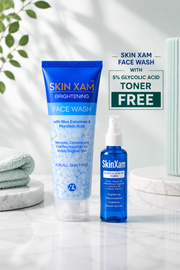
Skin Xam Brightening Face Wash, formulated with Mandelic Acid and Niacinamide, clears overnight oil from the T-zone without leaving the cheeks tight. Massage for about 60 seconds with lukewarm water, then rinse and pat dry.
Step 2 — Treat
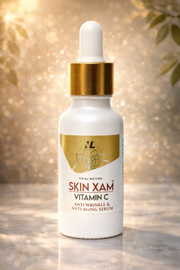
Skin Xam Vitamin C Serum on slightly damp skin. Two to three drops, pressed gently into the face. Lightweight enough that it won't sit greasy on the T-zone.
Step 3 — Moisturize
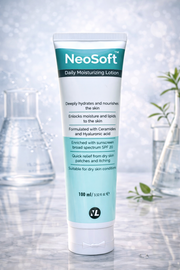
NeoSoft Moisturizing Lotion — a pea-sized amount for the whole face. Hyaluronic Acid and Ceramides hydrate the cheeks while staying light enough for the T-zone. Don't skip the oily areas: dehydrated skin produces more oil, not less.
Step 4 — Protect
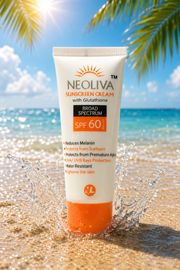
Neoliva SPF 60 Sunscreen Cream as the final morning step, every day of the year. Broad-spectrum UVA/UVB protection in a texture that doesn't sit heavy on oily skin. Reapply every two hours if you're outdoors.
Night Routine
Step 1 — Cleanse
Same face wash, slightly longer massage (about 90 seconds) to properly remove sunscreen, makeup, and the day's dust buildup from the T-zone.
Step 2 — Treat
Medix Skin Brightening Serum — Alpha Arbutin, Vitamin C, Ferulic Acid and Hyaluronic Acid in one formula. It brightens uneven tone and hydrates at the same time, which is what makes it a practical single-step treatment for combination skin at night.
Step 3 — Hydrate
NeoSoft again, slightly more generously than in the morning. Overnight is when the skin barrier does most of its repair work, and the extra hydration supports it.
Treat Different Zones Differently
Cleanser, serum, moisturizer and SPF all go on the full face. Where zoning helps:
- Cleansing: spend more massage time on the T-zone, less on the cheeks
- Richer creams or facial oils: cheeks, jawline and around the eyes only — keep them off the T-zone
- Spot treatments: only on active blemishes, never across the whole face
- Hydrating masks: cheeks and jawline, once or twice a week
Adjusting Through the Year
Summer (April–September)
Use slightly less moisturizer on the T-zone and lean more on the serum for hydration. Reapply sunscreen more often. Drink more water — internal dehydration shows up as extra oil.
Winter (October–March)
Increase moisturizer on the cheeks and jawline. Sunscreen stays in the routine — the UV index in Pakistan remains high even in cooler months.
Monsoon (July–August)
Humidity pushes oil production up. Keep cleansing consistent to avoid congestion, stay with lightweight textures, and don't drop sunscreen just because it's cloudy.
Five Mistakes That Make Combination Skin Worse
1. Washing too often
More than twice a day strips the barrier, and the skin responds by producing more oil and feeling drier. Twice daily is enough — rinse with plain water after workouts instead of a third cleanse.
2. Skipping moisturizer on the T-zone
The most common mistake. Leaving oily areas unmoisturized signals the skin to compensate with more sebum. Use a light formula everywhere.
3. Using heavy creams
Thick creams feel greasy on combination skin and can congest the T-zone. Gels and gel-creams work better; save richer textures for the cheeks alone.
4. Treating sunscreen as optional
Skipping SPF on cloudy days or indoors undoes the rest of the routine. UV damage is what destabilises the barrier that everything else is trying to repair.
5. Changing products every few weeks
Skin needs four to six weeks to respond to a new routine. Switching before then means never seeing whether something actually worked.
Frequently Asked Questions
How often should I wash combination skin?
Twice a day — morning and night. If you've been sweating, rinse with water and save the proper cleanse for the evening.
Can I use the same products on my T-zone and my cheeks?
Yes. A well-balanced, non-comedogenic routine works across both. Zoning is only needed when you add extras like a richer night cream or a spot treatment.
Why is my T-zone still oily even though I moisturize?
Usually one of four things: not enough water internally, over-cleansing, a moisturizer that's too heavy, or hormonal and genetic factors that a routine can manage but not eliminate.
Can I use Skin Xam Face Wash and Medix Serum together?
Yes — that pairing is the core of the night routine above. The face wash cleanses and gently exfoliates; the serum treats and hydrates.
How long before I see a difference?
Texture usually improves first, within a couple of weeks. Oil control tends to settle around three to four weeks, and tone and clarity continue improving through six to eight weeks of consistent use.
Is this routine suitable for sensitive skin?
Start with just the cleanser and moisturizer for two weeks, then introduce the serums one at a time. Patch-test along the jawline before applying anything new to the full face.
Why does my combination skin get worse in summer?
Heat and humidity increase sebum production — it's expected, not a sign the routine has stopped working. Ease back on moisturizer over the T-zone and reapply sunscreen more often.
Does this work for acne-prone combination skin?
Yes. The Mandelic Acid in the face wash helps keep pores clear. If you're using a prescription acne treatment, introduce it slowly and speak to a dermatologist about how to layer it with this routine.
Save More: Build Your Own Bundle
Love this combination skin routine? Combine any Novelax Pharma products and get 15% off your entire order automatically at checkout when your order reaches Rs. 4,000 in retail value—no code needed. Build your own bundle and save today.
The Short Version
Combination skin doesn't need two separate routines — it needs one balanced one. Gentle cleansing, lightweight hydration everywhere, targeted treatment where it's needed, and sunscreen without exception.
Skin Xam Brightening Face Wash, Skin Xam Vitamin C Serum, Medix Skin Brightening Serum, NeoSoft Moisturizing Lotion and Neoliva SPF 60 Sunscreen cover every step of that. Give it six to eight weeks of consistency and adjust with the seasons.